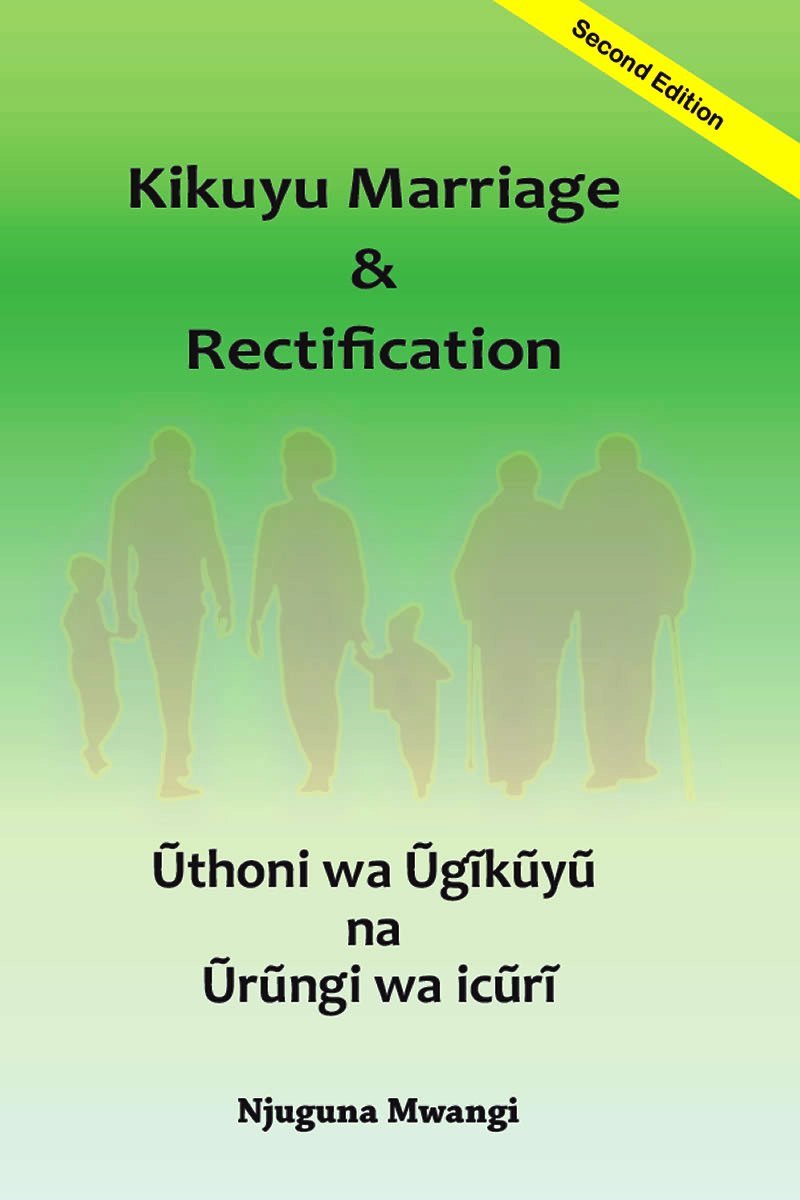
Kikuyu Marriage and Rectification is not merely a book about marriage customs. It is a deeper reflection on how Agĩkũyũ identity was historically organized, how that identity was disrupted by colonization, and how rectification now becomes an act of cultural recovery.
Before colonial interference, Kikuyu marriage was not a casual private arrangement between two individuals. It was a carefully crafted social institution rooted in the clan system that traces its origin to Gĩkũyũ and Mũmbi. The clan was not a minor background detail. It was one of the major markers of identity, belonging, responsibility, and social order.
Marriage therefore operated within well-defined cultural boundaries. It linked families, clans, generations, ancestors, land, morality, and community recognition. It protected social harmony. It gave children identity. It created legitimate relationships between families. It ensured that marriage was not only about affection, but also about continuity, accountability, and communal stability.
This time-tested system was later disrupted by colonization. Colonial rule did not only take land, labor, and political authority. It also interfered with names, languages, rituals, marriage practices, clan memory, and African systems of meaning. Missionary interpretations often treated African customs as backward, pagan, or sinful, without first understanding their internal logic.
The result was cultural dislocation. Many Kikuyu people inherited fragments of their own tradition without the full framework that once gave those traditions meaning. Practices such as rũracio, clan recognition, ceremonial sittings, and rectification were sometimes remembered, but not always understood. What appears today as confusion is therefore not cultural weakness. It is the consequence of historical disruption.
This is where rectification becomes important.
Rectification is not a blind return to the past. It is not an attempt to repeat every old practice mechanically. Rather, rectification is reclamation. It is a conscious effort to restore meaning where meaning was interrupted. It allows families to recover legitimacy, dignity, identity, and cultural continuity in a world where colonial disruption created uncertainty.
In this sense, Kikuyu Marriage and Rectification is a book of memory, correction, and restoration. It invites the young to understand that their culture was not disorderly. It was structured. It was thoughtful. It was moral. It was communal. And where that structure was damaged, rectification offers a path toward healing.
Rectification becomes reclamation.