
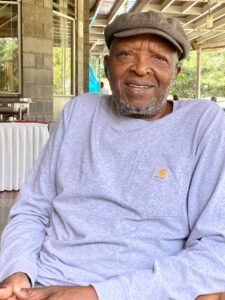
 Mzee Njuguna Mwangi traces his ancestry to the two Agīkūyū clans namely, Gathubati and Muga. Therefore he is a Mūithirandū wa Mbarī Ya Gathūbatī. His academic and professional interests were focused on various branches of economics which he studied at The University of Dar-es-Salaam Tanzania , McMaster University, Ontario Canada and Boston University in the USA.
His interests outside economics was first planted in his young mind by some scholars in Sociology and Social Anthropology. Among those teachers, there was a distinguished scholar named Dr. Walter Rodney who wrote a seminal book “How Europe Underdeveloped Africa”, as the mentioned book opened my eyes to social effects by European Colonisation and Imperialism.
In addition, Njuguna Mwangi has read many research books on the impact of of Colonisation in Economics, social, political and culture structures of our modern days and time. One example is hoe Religion was and still is being used to change/colonise cultures and impose foreign names during Baptism when the teachings in the Bible does not require it because names are cultural specific and has meaning and a sense of identity to the people born in that culture. This realisation gave me he desire to research more on the role of culture in understanding oneself origin and identity.
As a mature adult, husband, father and grandfather, that interest has grown covering both my own Agīkūyū heritage and global events in particular; researching on the Histography and Evolution of the Abrahamic Religion Tree ( which founded the doctrine of One God and the Prophets), with its three branches namely: Judaism, Islam and Christianity and how they continue to impact on the social economic and political lives of Africans to this day.
I am concerned that many Kenyan youth today show increasing ignorance of their culture heritage including that of their own family history. My decades of research and documenting them in my books is my small attempt to remedy this ignorance atleast from my own ancestry and the Agīkūyū culture. I have not achieved this work alone, I ha e relied on the contributions of family members, friends, history scholars and professionals. My hope is that my research work will provide awareness of family roots and thus strengthen young Kenyan youth’s sense of both culture and individual identity.