An Interpretive Study of the Moral Foundations of the Mau Mau Revolution
by
Njuguna Mwangi
Nairobi, 2025
Preface
This chapter forms part of a larger work-in-progress by Njuguna Mwangi exploring the moral, theological, and socio-economic roots of Kenya’s Mau Mau Revolution. It draws from historical archives, oral testimony, missionary records, and interpretive scholarship to show that the revolt was not an outburst of savagery, as colonial propaganda claimed, but the logical and moral outcome of deliberate dispossession and spiritual subjugation.
1. LAND AS THE AXIS OF FREEDOM
The Mau Mau revolt did not burst forth from chaos or primitive fury. It emerged from a deep historical logic — an unbroken chain of dispossession, coercion, and spiritual subjugation that left the Agĩkũyũ with little to lose except their ancestral soil and their sense of self. Mau Mau from Within by Donald Barnett and Karari wa Njama captures this from the inside, showing a people who rose not from madness but from memory — from the accumulated knowledge of what had been taken and what must be reclaimed. [1]
From the early twentieth century, colonial Kenya’s political economy was engineered around land. Through Crown Lands Ordinances, reserve boundaries, and judicial rulings, the British administration transformed Agĩkũyũ ancestral tenure into the Crown’s prerogative. The fertile highlands of Kiambu, Nyeri, and Fort Hall were alienated for white settlement, while the Agĩkũyũ were confined to reserves — compressed spaces where cultivation, grazing, and life itself became a daily struggle for space. [2]
By 1938, official syntheses recorded the Kikuyu districts of Fort Hall and Kiambu at densities of over 140 persons per square mile — already among the most overcrowded territories in East Africa. In the Nairobi–Limuru–Kiambu corridor, District Commissioners reported densities of 400 persons per square mile as early as 1919. By 1945, Kiambu’s density had officially reached approximately 331 persons per square mile. [3]
The Gaki ridges of Nyeri — rich in banana groves, sweet potatoes, and coffee — were scarcely less crowded. Though exact figures for 1938 are lacking, district-level evidence indicates densities near 300 persons per square mile by the mid- to late 1940s. The meaning of these numbers is stark: the land was being made small per capita by design. [4]
Lord Delamere, the most powerful of the settler barons, declared that Africans must not have enough land to sustain themselves — for, in his words, “if the native has sufficient land to live on, the labor question can never be settled.” His remedy was taxation: the only way, he insisted, to “compel the native to leave his reserve for the purpose of seeking work.” [5]
It was not merely policy — it was an ideology of scarcity intended to create dependence. The Agĩkũyũ family that once lived by its shamba and livestock was now reduced to a tenant on its ancestral soil, compelled to labor on settler estates to survive. This is the crucible from which the Mau Mau Revolt would rise.
2. THE MACHINERY OF DISPOSSESSION
Land expropriation and taxation worked hand in glove with labor compulsion. The Masters and Servants Ordinance (1906), the Hut and Poll Taxes (1901, 1910), and the Kipande system (1918) ensured that African men were both mobile and traceable — an unpaid army of coerced workers. [6]
Colonial economic logic made no secret of its arithmetic: shrink African holdings until they can no longer support a family; raise taxes payable only in cash; and restrict Africans from cash-cropping coffee or pyrethrum. The result is a labor pool permanently tethered to settler enterprise. Colonial capitalism required African poverty to function.
In Mau Mau from Within, Karari wa Njama recounts this economy from the underside. His parents were squatters on European estates — tillers without title, tenants without rights. They worked from dawn to dusk, earning barely enough to meet hut-tax obligations. Their story mirrors thousands of others: dispossessed families transformed into squatters by policy, their ancestral inheritance commodified into rent and wages. [7]
3. COLONIZING CHRISTIANITY AND THE “SLAVE BIBLE” DOCTRINE
Domination in Kenya was never sustained by the gun alone; it required moral anesthesia — a theology that made obedience appear divine and rebellion appear sinful. This was the role of colonizing Christianity.
British missions, while often sincere in their civilizing intentions, became enmeshed in the colonial system. Mission schools and churches taught obedience, punctuality, and humility — virtues suited not for liberation but for efficient labor. Over time, Christianity was curated into an ideology of acquiescence.
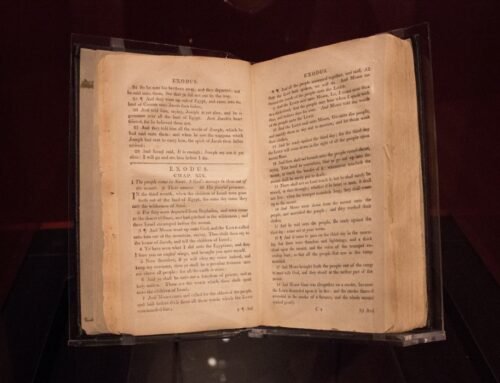
The roots of this distortion reach back to the infamous “Slave Bible” of 1807, published in London by the Society for the Conversion of Negro Slaves for use in the West Indies. It was a mutilated Bible — of 1,189 chapters, only 232 remained. Nearly all passages of liberation were excised: the Book of Exodus vanished, prophetic calls for justice were omitted, and the Pauline declaration that “in Christ there is neither bond nor free” was erased.
What remained were texts of submission: “Servants, obey in all things your masters” (Colossians 3:22); “Let every soul be subject to higher powers” (Romans 13:1). As theologian Vincent Harding shows, this was not an oversight but a deliberate theology of control — faith turned into the empire’s moral police. Dr. Cheryl Sanders calls it “the moral disarmament of the enslaved.”
When British missionaries came to Africa, they carried not the physical Slave Bible but its ideological DNA. Sermons in mission schools in Kikuyu and Meru urged obedience to authority, rejection of “pagan oaths,” and patience under suffering. Kwame Bediako notes that this version of Christianity “cut Africans from their cultural roots, then blamed them for being rootless.”
In colonial Kenya, churches discouraged political organization and preached that earthly obedience guaranteed heavenly reward. Christianity thus became the velvet glove of imperial power — the moral grammar of subjugation. Bruce Berman describes it as a system that “made religion the soul of the labor market.”
Yet the Mau Mau refused this spiritual colonization. As Ngũgĩ wa Thiong’o would later write, “The most potent weapon of the oppressor is the mind of the oppressed.” The movement’s oath and forest catechisms represented a spiritual counterattack: they reclaimed the right to interpret God in the language of land and freedom.
4. THE ARITHMETIC OF COERCION
By the 1940s, the consequences of deliberate overcrowding were catastrophic. Families subdivided their tiny plots until hunger became normal. The Agĩkũyũ were forbidden from planting coffee — the crop that enriched settlers — and forced to sell labor cheaply.
The Swynnerton Plan (1954), often hailed as reform, merely codified Delamere’s doctrine: consolidate land under “progressive” Africans and uproot the rest as “surplus.” John Lonsdale terms this the moral economy of deprivation — the conversion of virtue into labor discipline.
Statistical density became political destiny. When Kiambu stood at 331 persons per square mile and Gaki near 300, rebellion was no longer ideological but existential. Overcrowding was not demographic fate but policy success: a system that made Africans land-hungry, labor-ready, and spiritually subdued.
Barnett and Njama’s testimony reveals how dispossession bred radical faith. Each oath sworn was both a vow of secrecy and an act of reclamation; each forest meeting, a sacrament of renewal. Women served as couriers and healers, elders offered counsel, and youths bore arms.
The Mau Mau Revolt was thus not mere violence but a theological protest — a reassertion of moral order where the state had nullified it.
5. COUNTER-THEOLOGY OF FREEDOM
If colonizing Christianity had sanctified fear, Mau Mau theology sanctified freedom. The oath restored the covenant between land and life; the forest became the new Sinai. Here, spiritual and material redemption fused.
Against the edited gospel of the Slave Bible — which erased Exodus — the Agĩkũyũ enacted their own Exodus, leaving reserves and labor lines for the forests of Nyandarua and Aberdare. Desmond Tutu later described this as “the gospel rediscovered among the dispossessed.”
Where the colonizer’s church preached, “Servants, obey your masters,” the forest priesthood declared, “God walks with the oppressed.” This was liberation theology before the term existed.
Mau Mau from Within shows that rebellion was not madness but morality reborn. The oath was not superstition but sacrament — an indigenous Eucharist of resistance.
6. THE SLAVE BIBLE DOCTRINES AND COLONIAL SUBJUGATION
The Slave Bible printed in 1807 embodied a theology of control whose spirit was carried to Africa long after its pages ceased to circulate. Scholars such as Willie James Jennings argue that the Christian imagination itself was colonized — race and hierarchy became baptized categories. The doctrine was simple yet devastating: obedience equals holiness; rebellion equals sin.
Within this moral logic, domination appeared divinely ordered, exploitation became stewardship, fear was renamed reverence, and submission was exalted as righteousness. Anthony Reddie traces how this “moral engineering of obedience” survived into twentieth-century mission education; textbooks in Sierra Leone, Uganda, and Kenya repeated the message that service to the master is service to God.
In Kenya, these ideas crystallized into policy. Mission schools disciplined bodies as much as minds; the colonial state rewarded “good Christians” with clerical posts while branding independent preachers as subversive. Mercy Amba Oduyoye later noted that colonial Christianity “produced obedience, not faith.” Musa Dube identifies this pedagogy as the gendered face of empire — African women were doubly silenced, first by patriarchy and then by colonial scripture.
Through this alliance of pulpit and plantation, faith became the empire’s psychological frontier. The sermon replaced the sword; the catechism replaced the chain.
7. INTERPRETIVE CONTEXT: THEOLOGICAL AND SCHOLARLY PERSPECTIVES
Modern scholars across theology, history, and literature confirm that Mau Mau’s revolt was as much a war of interpretation as of rifles. David Anderson shows how British soil-conservation policies in Central Kenya disguised land seizure under the language of improvement. Bruce Berman’s political economy exposes the dialectic of domination — law, church, and labor acting in concert.
John Lonsdale reframes the conflict as a moral economy: peasants demanded justice, not chaos. Kwame Bediako and Lamin Sanneh reveal how translation and vernacular theology allowed Africans to reclaim the biblical narrative that missions had truncated. John Mbiti and Ngũgĩ wa Thiong’o each argue that genuine liberation begins with reclaiming the African moral imagination; language and spirituality are the twin battlegrounds of freedom.
In this interpretive light, Mau Mau’s forest sermons and oaths emerge as the first African liberation theology in practice. Allan Boesak reminds us that a gospel which comforts the oppressor is not Christ’s gospel, while Desmond Tutu insists that true peace is impossible without justice. Their later South-African theologies echo precisely what the Kikuyu rebels intuited in the 1950s — that God cannot be the author of subjection.
Thus, when the oath invoked Ngai as witness to stolen land, it restored moral order where empire had imposed hierarchy. The forest became the church of equality; the rifle, a reluctant liturgical instrument.
8. CONCLUSION: THE LOGIC OF REVOLT
Mau Mau from Within ultimately teaches that revolt was not madness but mathematics: when land is made deliberately small, wages intentionally meagre, and faith rewritten to forbid protest, rebellion becomes inevitable.
The uprising was the logical end of an illogical empire — the cry of a people denied both earth and heaven. It fused economic necessity with spiritual awakening. The Mau Mau oath was less a weapon than a word — a counter-scripture that restored the missing chapters of the Slave Bible: justice, deliverance, and dignity.
BIBLIOGRAPHY
Barnett, Donald L., and Karari wa Njama. Mau Mau from Within. London: MacGibbon & Kee, 1966.
Select Parts of the Holy Bible, for the Use of the Negro Slaves in the British West Indies. London: Society for the Conversion of Negro Slaves, 1807.
Anderson, David M. “The Colonial State and Soil Conservation in East Africa.” Journal of African History 25, no. 3 (1984): 327–340.
Bediako, Kwame. Christianity in Africa: The Renewal of a Non-Western Religion. Edinburgh: Edinburgh University Press, 1995.
Berman, Bruce. Control and Crisis in Colonial Kenya: The Dialectic of Domination. London: James Currey, 1990.
Boesak, Allan. Black and Reformed: Apartheid, Liberation, and the Calvinist Tradition. Maryknoll, NY: Orbis Books, 1984.
Dube, Musa W. Postcolonial Feminist Interpretation of the Bible. St. Louis: Chalice Press, 2000.
Harding, Vincent. There Is a River: The Black Struggle for Freedom in America. New York: Harcourt Brace, 1981.
Jennings, Willie James. The Christian Imagination: Theology and the Origins of Race. New Haven: Yale University Press, 2010.
Lonsdale, John. “The Moral Economy of Mau Mau.” In Unhappy Valley: Conflict in Kenya and Africa, edited by Bruce Berman and John Lonsdale. London: James Currey, 1992.
Mbiti, John S. African Religions and Philosophy. London: Heinemann, 1969.
Ngũgĩ wa Thiong’o. Decolonising the Mind. Nairobi: Heinemann, 1986.
Oduyoye, Mercy Amba. Beads and Strands: Reflections of an African Woman on Christianity in Africa. Maryknoll, NY: Orbis Books, 2001.
Reddie, Anthony G. Theologizing Brexit: A Liberationist and Postcolonial Critique. London: Routledge, 2019.
Sanneh, Lamin. Translating the Message: The Missionary Impact on Culture. Maryknoll, NY: Orbis Books, 1989.
Tutu, Desmond. The Rainbow People of God. New York: Doubleday, 1986.