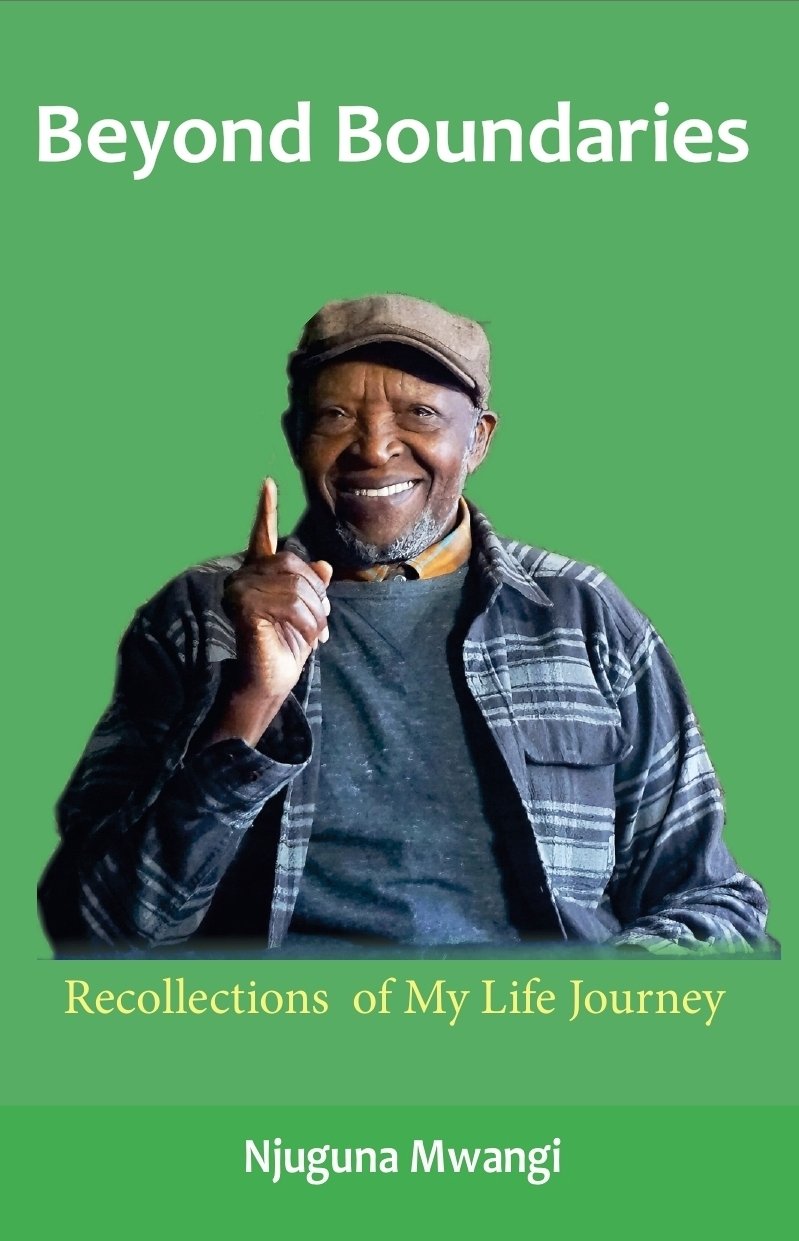
In his memoir, Njuguna Mwangi reflects on the stark contrasts he has witnessed in his nearly eight decades of life, which began in a Kenyan village during the colonial era. His father served as a colonial civil servant, while his grandfather, after whom he is named, was executed by the ‘loyalist’ Home Guards due to his involvement with Mau Mau. The teachings of the Catholic Church shaped Njuguna’s upbringing, and he was baptized in 1954 with a Christian name, followed by a second name at his confirmation in 1961. Italian missionary priests played a significant role in his early years, recognizing his intelligence and encouraging him towards the priesthood. Additionally, his paternal uncle, a respected ‘Mūndū Mūgo’ (traditional healer), instilled in Njuguna a deep respect for Kikuyu traditions.
His university education in Tanzania, Canada, and the USA broadened his global awareness and understanding of the various interests and forces at play worldwide. At the University of Dar es Salaam, he was influenced by his teacher, the late Walter Rodney, whose seminal book “How Europe Underdeveloped Africa” shed light on the economic, social, and cultural impacts of colonialism on Africa. During his time in Dar es Salaam, Njuguna began embracing his Kikuyu heritage by attempting to shed his foreign names, recognizing his identity as Njuguna, as he believed God had intended him to be. This realization was inspired by Jeremiah 1:5, where God knew him as Njuguna and placed him within his cultural context for a purpose.
His reflections on his adult life, both personal and professional, continue to focus on contrasts, particularly between ‘tradition’ and ‘modernity’. While he values the excellent education that he and his five children received outside Kenya, he regrets that they have settled abroad. Reflecting on his own Agīkūyū culture, he is concerned that many Kenyan youth from all communities are increasingly unaware of their cultural heritage. Njuguna hopes that through reading his memoir, people will realize that it is possible to fully function as a citizen of the modern, multicultural, and digital world while retaining a sense of cultural identity and the value of one’s traditional heritage.
ISBN: 9789966123046