-
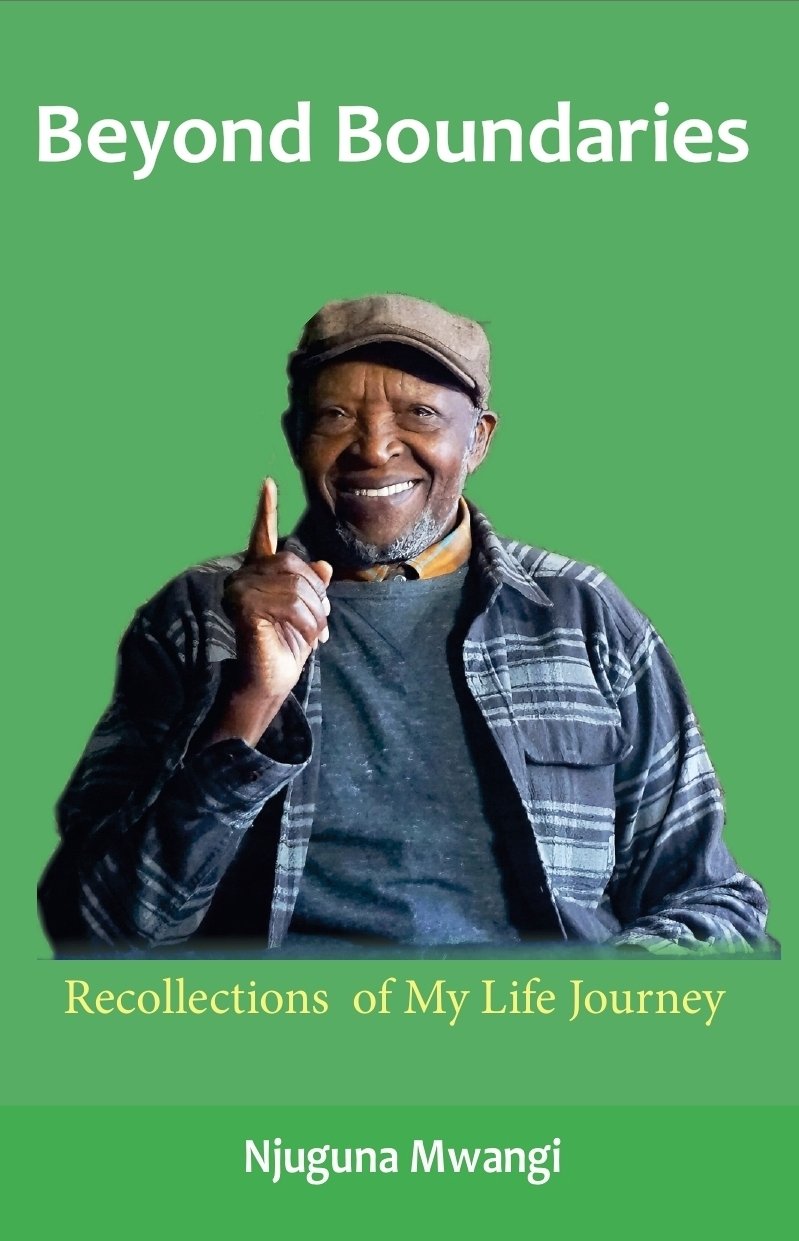 In his memoir, Njuguna Mwangi reflects on the stark contrasts he has witnessed in his nearly eight decades of life, which began in a Kenyan village during the colonial era. His father served as a colonial civil servant, while his grandfather, after whom he is named, was executed by the ‘loyalist’ Home Guards due to his involvement with Mau Mau. The teachings of the Catholic Church shaped Njuguna’s upbringing, and he was baptized in 1954 with a Christian name, followed by a second name at his confirmation in 1961. Italian missionary priests played a significant role in his early years, recognizing his intelligence and encouraging him towards the priesthood. Additionally, his paternal uncle, a respected ‘Mūndū Mūgo’ (traditional healer), instilled in Njuguna a deep respect for Kikuyu traditions. His university education in Tanzania, Canada, and the USA broadened his global awareness and understanding of the various interests and forces at play worldwide. At the University of Dar es Salaam, he was influenced by his teacher, the late Walter Rodney, whose seminal book "How Europe Underdeveloped Africa" shed light on the economic, social, and cultural impacts of colonialism on Africa. During his time in Dar es Salaam, Njuguna began embracing his Kikuyu heritage by attempting to shed his foreign names, recognizing his identity as Njuguna, as he believed God had intended him to be. This realization was inspired by Jeremiah 1:5, where God knew him as Njuguna and placed him within his cultural context for a purpose. His reflections on his adult life, both personal and professional, continue to focus on contrasts, particularly between ‘tradition’ and ‘modernity’. While he values the excellent education that he and his five children received outside Kenya, he regrets that they have settled abroad. Reflecting on his own Agīkūyū culture, he is concerned that many Kenyan youth from all communities are increasingly unaware of their cultural heritage. Njuguna hopes that through reading his memoir, people will realize that it is possible to fully function as a citizen of the modern, multicultural, and digital world while retaining a sense of cultural identity and the value of one’s traditional heritage. ISBN: 9789966123046
 -
 Reclaiming Tradition. Restoring Meaning. For generations, Kikuyu marriage was not a complicated ritual system, it was a carefully ordered social covenant. It united families, protected lineage, affirmed community consent, and preserved moral harmony and balance. Over time, however, colonial missionary influence, selective documentation, and cultural misinterpretations reshaped and diluted many of its original meanings. Sacred processes were simplified, misunderstood, or abandoned altogether. The result is a modern generation often unsure of what truly constitutes an authentic Kikuyu marriage. In this expanded Second Edition, Njuguna Mwangi moves beyond explanation to restoration. Drawing from indigenous knowledge, oral cultural history, and the internal philosophy of Kikuyu society, he reconstructs the authentic stages of marriage as practised before colonial disruption. He clarifies the purpose behind every sitting and ceremony, corrects inherited distortions, and demonstrates that Kikuyu marriage was founded on simplicity, consensus, and communal validation, not rigid ritualism. Most powerfully, this book introduces the concept of a Rectification Ceremony. This ceremony reveals how families who may have missed traditional steps can restore legitimacy, harmony and the rich culture, through a single culturally grounded sitting (gücokia rūĩ mūkaro). At its heart lies a profound Kikuyu truth: Marriage is not invalidated by historical interruption; it can be made whole through collective acknowledgement. ISBN: 978-9966-123-05-3
 -
 The Genealogy of Some Agīkūyū Clans Njuguna Mwangi traces his ancestry to the two Agīkūyū clans, namely; Gathubati and Muga. Therefore he is a Mūithīrandū wa MbarīYa Gathubati. His academic and professional interests were focused on various branches of economics, which he studied at The Universities of Dar-es-Salaam Tanzania, McMaster University, Ontario Canada and Boston University in the USA. His interest outside economics was first planted in his young mind by some scholars in sociology and social anthropology. Among those teachers, there was a distinguished scholar named Dr. Walter Rodney who wrote a seminal book “How Europe Underdeveloped Africa” as this opened his eyes to social effects by European Colonization and Imperialism. In addition Njuguna Mwangi has read many research books on the impact of colonialization in economics, social, political and culture structures of today. One such example being, even religion being used to change/colonize cultures and impose foreign names during baptism when the bible does not require it (names are cultural specific to people born in that culture). This realisation gave the author the desire to research more on the role of culture in understanding one self and his/her origin. As a mature adult, husband, father and grandfather, that interest in cultural issues has grown covering both his own Agīkūyū heritage and global events in particular; researching on the historiography and the evolution of The Abrahamic Religion Tree (which founded the doctrine of one God and the prophets) with its three branches; Judaism, Islam and Christianity and how they continue to impact on the social economic and political lives of Africans to this day. He is concerned that many Kenyan youth today show increasing ignorance of their cultural heritage and even of their own family history. This project is a small attempt to remedy this ignorance at least from his own ancestry through the creation of detailed family trees that go back as far as oral memory permits. Njuguna did not achieve this work alone, he relied on the contributions of family members, friends and professionals. His hope is that it will provide awareness of family roots and thus strengthen people’s sense of both cultural and individual identity. ISBN: 9789966123015